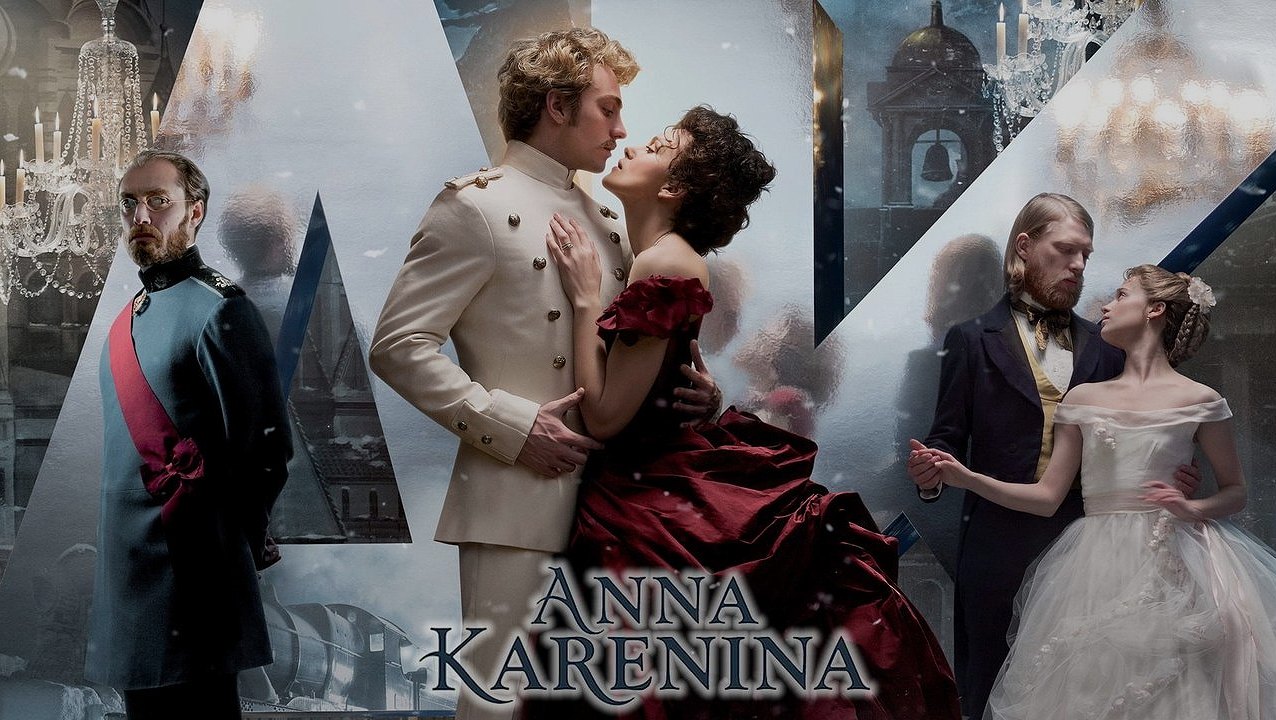

When Joe Wright teams up with Keira Knightley again after 'Pride & Prejudice' and 'Atonement', the result is 'Anna Karenina' (2012), a film adaptation of Tolstoy's classic literature that is not only visually stunning but also filled with emotions of love, greed, anger, and delusion, sharply reflecting 19th-century Russian high society. This film plunges us into the madness of forbidden love that destroys everything, both life and reputation.
Plot Summary (No Spoilers)
Anna Karenina (Keira Knightley) is a high-society woman in St. Petersburg married to a high-ranking official, Karenin (Jude Law). She has a perfect life on the surface but feels empty inside. When she travels to Moscow to help her brother Oblonsky (Matthew Macfadyen), who is having an affair, she meets Count Vronsky (Aaron Taylor-Johnson), a handsome young officer whose heart begins to stir. The forbidden relationship between them gradually develops from eye contact to a blazing fire of love, leading to a scandal that shakes high society and forces Anna to choose between love and social status, family, and morality. The story unfolds through the perspective of Levin (Dornan), a young man seeking the meaning of life, representing another pole of society.
Acting and Characters
Keira Knightley perfectly embodies Anna, conveying both vulnerability and determination simultaneously. Her eyes communicate a mix of pain and joy. Her love scenes with Vronsky are passionate and memorable. Meanwhile, Jude Law as Karenin, the cold and strict husband, makes the audience sympathize with both Anna and himself. His performance is subtle, showing the pain of betrayal while maintaining his image. The return of supporting actor Matthew Macfadyen as the playful and charming Oblonsky adds color to the heavy story. Additionally, Aaron Taylor-Johnson as Vronsky is handsome and dangerous, fitting the archetype of a young man who leads women astray.
Direction, Cinematography, and Music
Joe Wright adopts a distinctive approach by filming as if it were a stage play, starting in an old theater and gradually expanding to the outside world. This method conveys the artificiality and falseness of the high society in which Anna is trapped. Seamus McGarvey's cinematography is beautiful in every frame, especially the ball scene where continuous camera movement reflects the excitement and danger of new love. Dario Marianelli's score perfectly creates a romantic and tragic atmosphere, deepening the characters' emotions.
Editorial Analysis
What makes Anna Karenina different from other versions is its emphasis on the theatricality of real life. Russian high society is like a stage where everyone must wear a mask. Anna tries to break the rules but is cruelly punished by society. The film also reflects the gap between city and countryside through Levin, who finds happiness in a simple life. In contrast, Anna is trapped in a golden cage that slowly suffocates her. The editorial team views the film as telling a complex love story, not just about adultery but about freedom and self-acceptance. However, the pacing in some parts may be too slow for general audiences. Those who appreciate artistry and high-class drama will surely fall in love with this film. For more information on classic films and other movie reviews, follow us at หนังใหม่ออนไลน์
Verdict
For fans of quality romantic dramas and art lovers, 'Anna Karenina' is a must-watch. Keira Knightley and Jude Law's performances are excellent, the visuals are breathtaking, and Joe Wright's interpretation is fresh and engaging. Although the pacing may not appeal to everyone, overall it is a film well worth watching.
Screenshots


👍 Pros
- +Powerful performances by Keira Knightley and Jude Law
- +Stunning, creative stage-play-like cinematography
- +Music score that matches the story's mood
- +Hot and believable chemistry between the leads
- +A multi-dimensional interpretation of classic literature
👎 Cons
- −Pacing in some parts is too slow
- −Transition from stage to real world may confuse some viewers
- −Some characters are underdeveloped, like Levin
Top Cast




FAQ
The 2012 version uses a stage-play presentation style, starting in a theater and blending with the real world, creating a sense of artificiality and falseness of high society, unlike other versions that are usually realistic.
The film has quite passionate love scenes but is not too explicit, focusing more on emotion than graphic sexual expression.
It is suitable for viewers who enjoy high-class romantic dramas, classic literature, beautiful cinematography, and intense performances. It may not be suitable for those who prefer action movies or fast-paced stories.